
c. 1970s GBD Black Cavendish Mixture 50g Full Unopened English Pipe Tobacco Tin
Going for $50.00 [15 Bids]
Reserve: [n/a]Winning: kk981
- Watch this auction
- Bid $52.00 or higher
- First Bid: 1 day ago
- Last Bid: 20 hours ago
- Shipping: n/a
Ends:
Days
Hours
Minutes
Seconds
Description
When the lid says GBD, the mind goes first to briar: a well-cut billiard, a sandblasted lovat, a pipe chosen from a shop case by a man who expected it to serve him for years. But here the old name appears somewhere more mysterious, on a black tin of English Cavendish, dressed in red, gilt, and Gothic lettering, as if it had been pulled from the back shelf of a London tobacconist just before closing time.
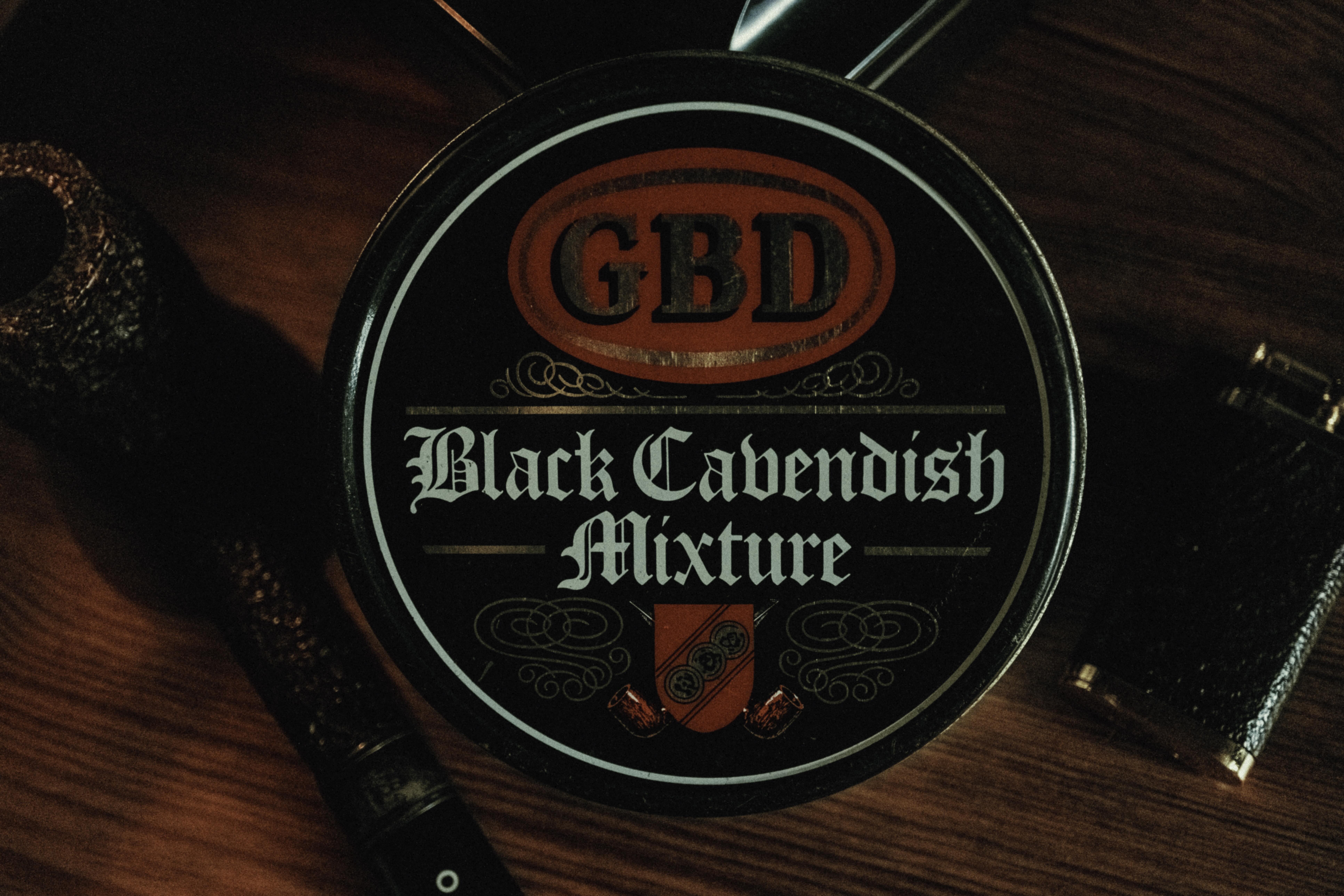
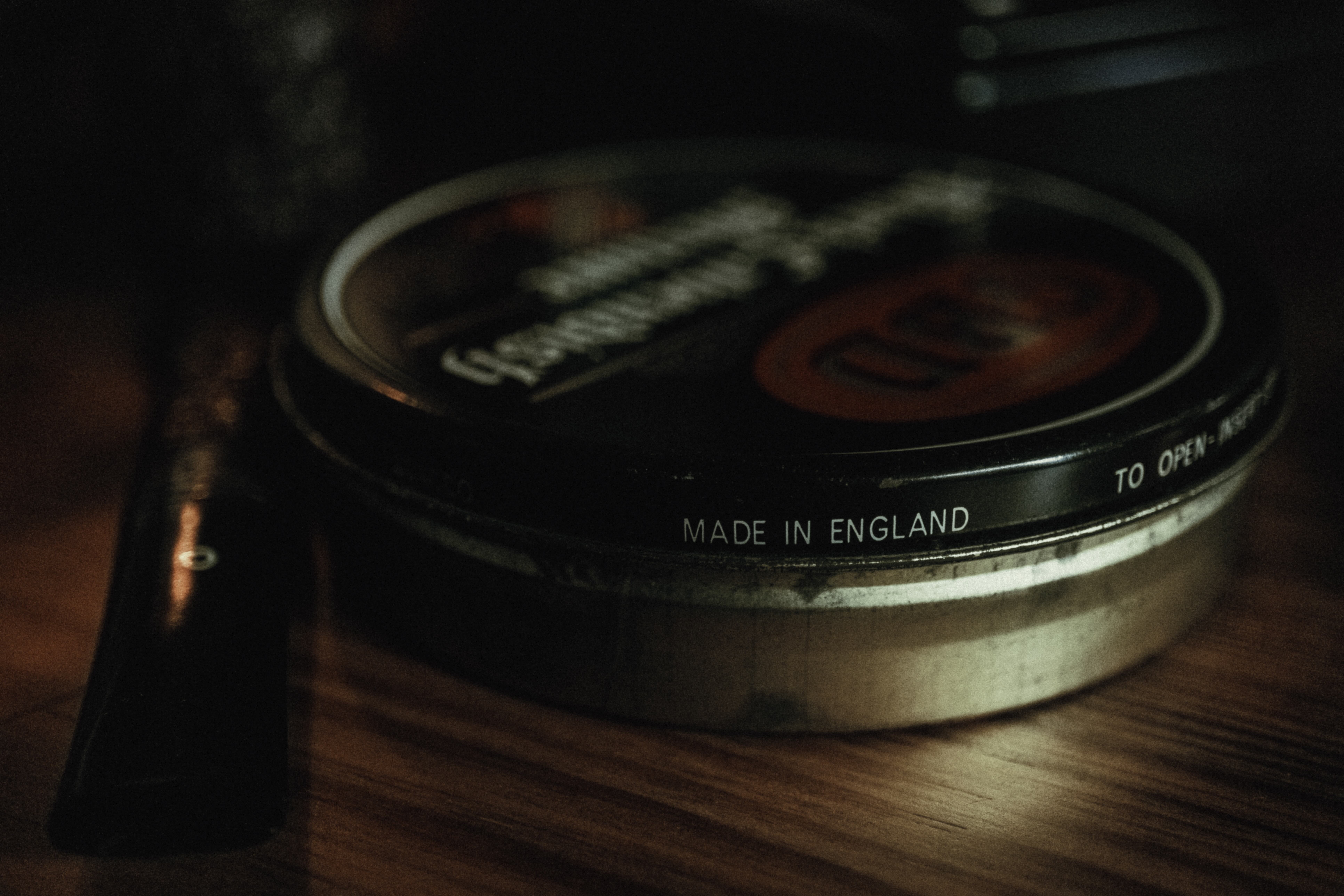
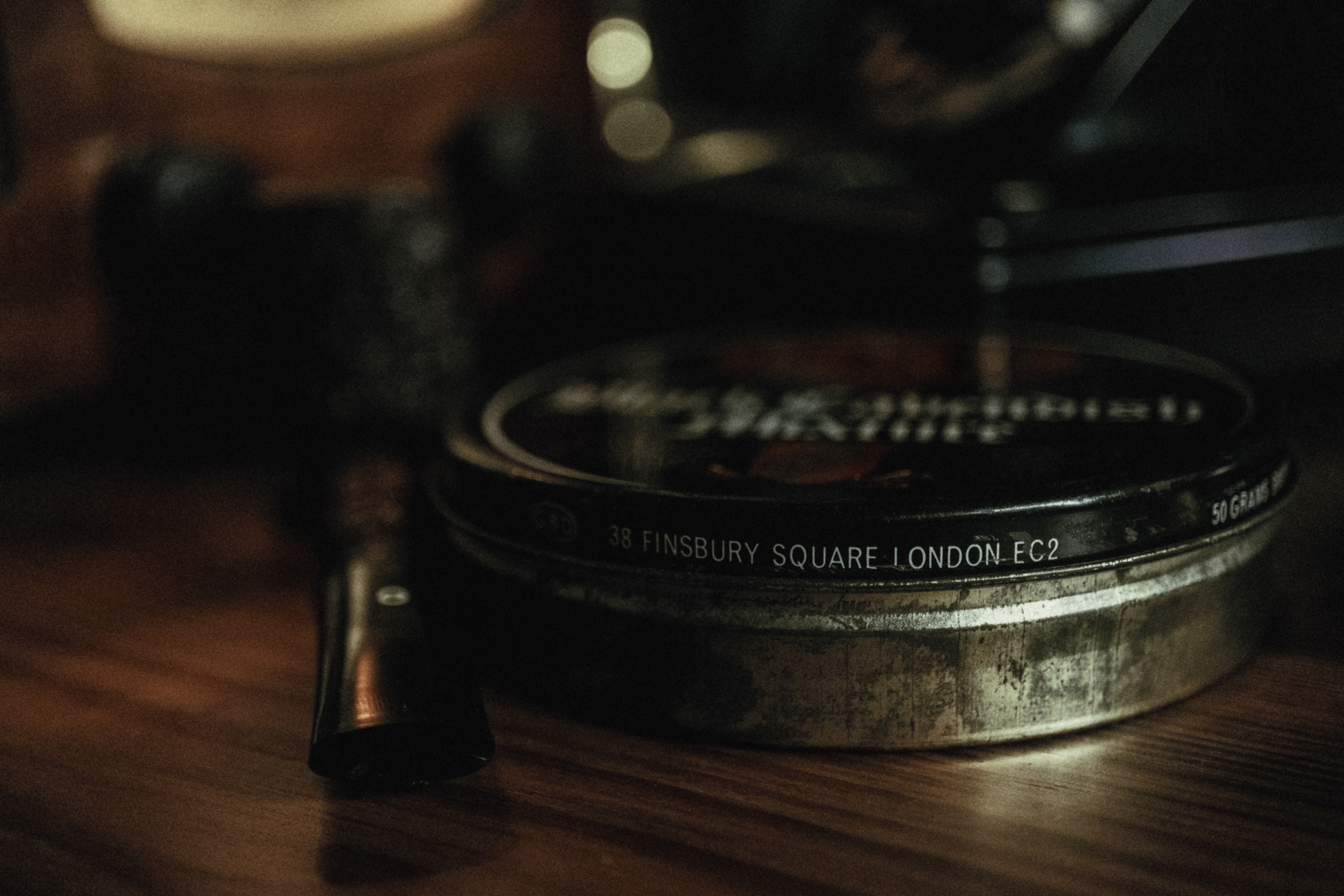
Offered here is a full and unopened 50 gram tin of GBD Black Cavendish Mixture, made in England and marked 38 Finsbury Square, London EC2. This tin is best dated to the 1970s. The 50 gram format places it after the earlier ounce-marked period, while the label design, London address, and lack of later barcode-style packaging keep it in the older English tobacconist era.
GBD is one of the great names in pipe history. The initials stand for Ganneval, Bondier, and Donninger, three master pipemakers who began the firm in Paris in 1850. GBD first made its reputation with meerschaum pipes, then followed the rise of briar and became a serious international name. In time, the brand became closely tied to London through A. Oppenheimer & Co., giving GBD the Anglo-French character collectors still recognize today: French beginnings, London trade, and a long reputation among discriminating pipe smokers.
That history gives this tin a special kind of presence. GBD is remembered first for pipes, but the old pipe houses lived in a fuller world than briar alone. Their names appeared on catalogues, fitted cases, shop cards, accessories, counter displays, and house tobaccos. This tin belongs to that older world, when the name stamped on a pipe could also appear on the tobacco chosen to fill it.
The blend itself is the real attraction. GBD Black Cavendish Mixture was not merely a generic aromatic with a pipe maker’s name on the lid. It belongs to the older English Cavendish tradition, where Virginia leaf, pressure, steam, time, and restraint could produce something dark, fragrant, and mellow without becoming heavy-handed. Larger examples of this mixture are known with wording describing majestic Virginia, London craftsmanship, and tobacco matured in rum, giving a strong indication of the intended character of the blend.
Black Cavendish is often misunderstood today. It is not a leaf variety, but a preparation. Tobacco is moistened, pressed, heated, steamed, and conditioned until it darkens and becomes softer, rounder, and naturally sweeter. In the English style, Black Cavendish could be composed and dignified rather than syrupy or perfumed. It was built for comfort, depth, and fragrance rather than novelty.
This tin remains unopened, so the contents have not been sampled. Based on the known character of the mixture, the expected profile would be mild to medium, darkly sweet, and Virginia-forward, with likely notes of rum, stewed fruit, malt, brown sugar, dark bread, cocoa, and soft matured tobacco. The room note would likely be gentle and refined rather than loud or cloying.
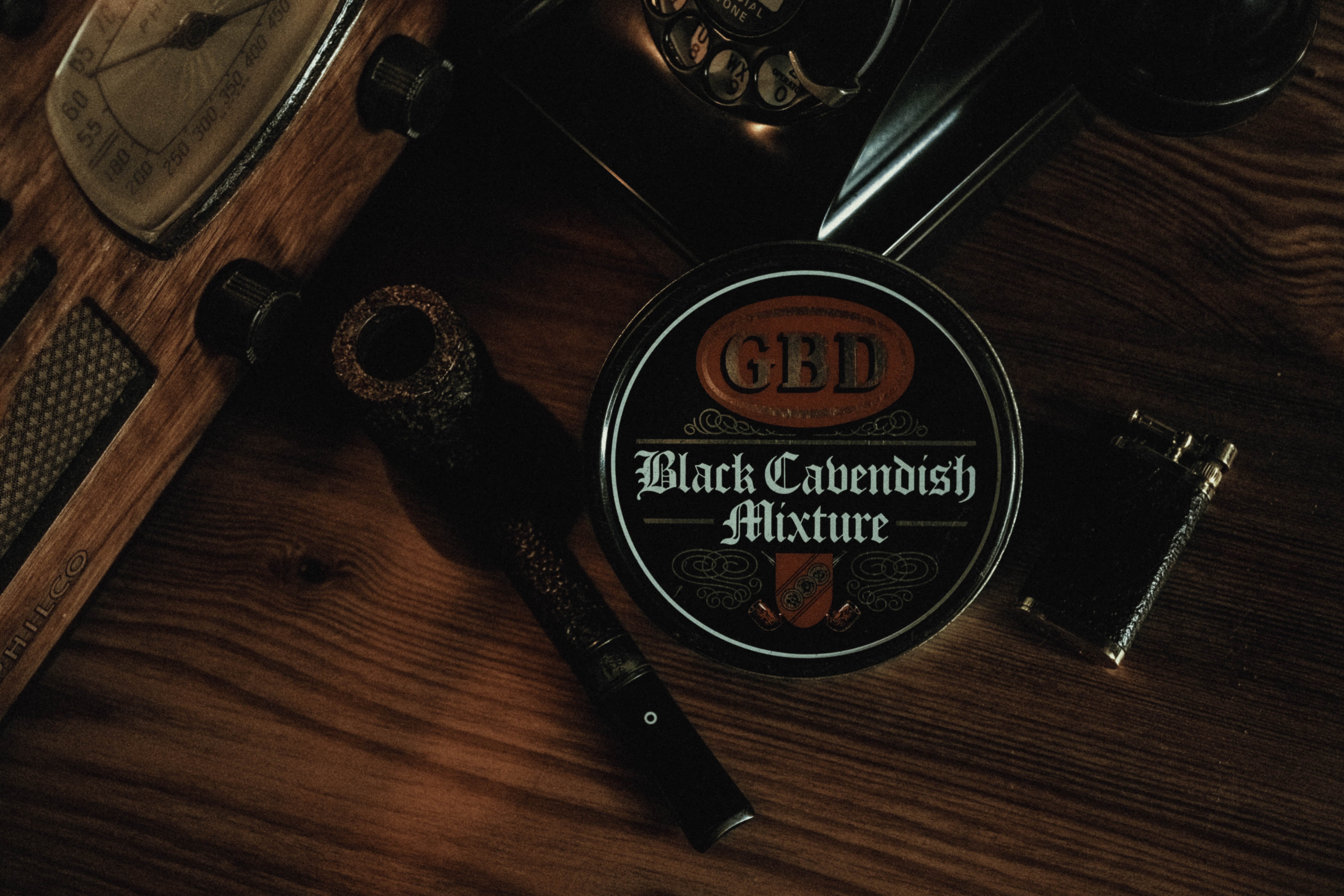
The tin presents beautifully. The black ground, red GBD oval, Gothic lettering, shield, scrollwork, and crossed pipes give it the look of a small London tobacconist sign. The top remains attractive and highly displayable. The metal sides and bottom show honest age, tarnish, spotting, rub, and handling wear as shown. The underside bears a stamped code or mark.
The tin is full and unopened, with an audible shake when moved. Depending on the smoker’s preference, the contents may benefit from careful rehydration after opening.
A scarce and evocative piece of GBD tobacco history, with all the right old-world elements: a London address, a great pipe name, an English Black Cavendish mixture, and a presentation that looks as though it came straight from the shelf of a vanished tobacconist.
Condition: Full and unopened 50g tin. Audible shake when moved. Exterior age, tarnish, spotting, rub, and handling wear as shown. Top label remains attractive and displayable. Bottom bears stamped marking/code.
Dating: c. 1970s.

Auction Information
kk981 bid $50.00June 28, 2026 10:52 am [auto]
Tins4Days bid $50.00June 28, 2026 10:52 am
kk981 bid $20.50June 28, 2026 10:47 am
Tins4Days bid $14.50June 28, 2026 10:11 am
MrSP bid $2.70June 28, 2026 10:10 am [auto]
Tins4Days bid $2.60June 28, 2026 10:10 am
MrSP bid $2.50June 28, 2026 10:10 am [auto]
Tins4Days bid $2.40June 28, 2026 10:10 am
MrSP bid $2.30June 28, 2026 10:10 am [auto]
Tins4Days bid $2.20June 28, 2026 10:10 am
MrSP bid $2.10June 27, 2026 10:48 pm [auto]
qmechanics bid $2.00June 27, 2026 10:48 pm
MrSP bid $1.20June 27, 2026 9:32 pm [auto]
mason bid $1.10June 27, 2026 9:32 pm
MrSP bid $1.00June 27, 2026 9:11 pm


Shipping: $10.04
From: n/a
To: n/a